Connections Between Review Ratings and Credit Distribution Strategies in Portable Bingo-Reel Entertainment Systems
Written by Mara Lange · Oct 22, 2026
Connections Between Review Ratings and Credit Distribution Strategies in Portable Bingo-Reel Entertainment Systems
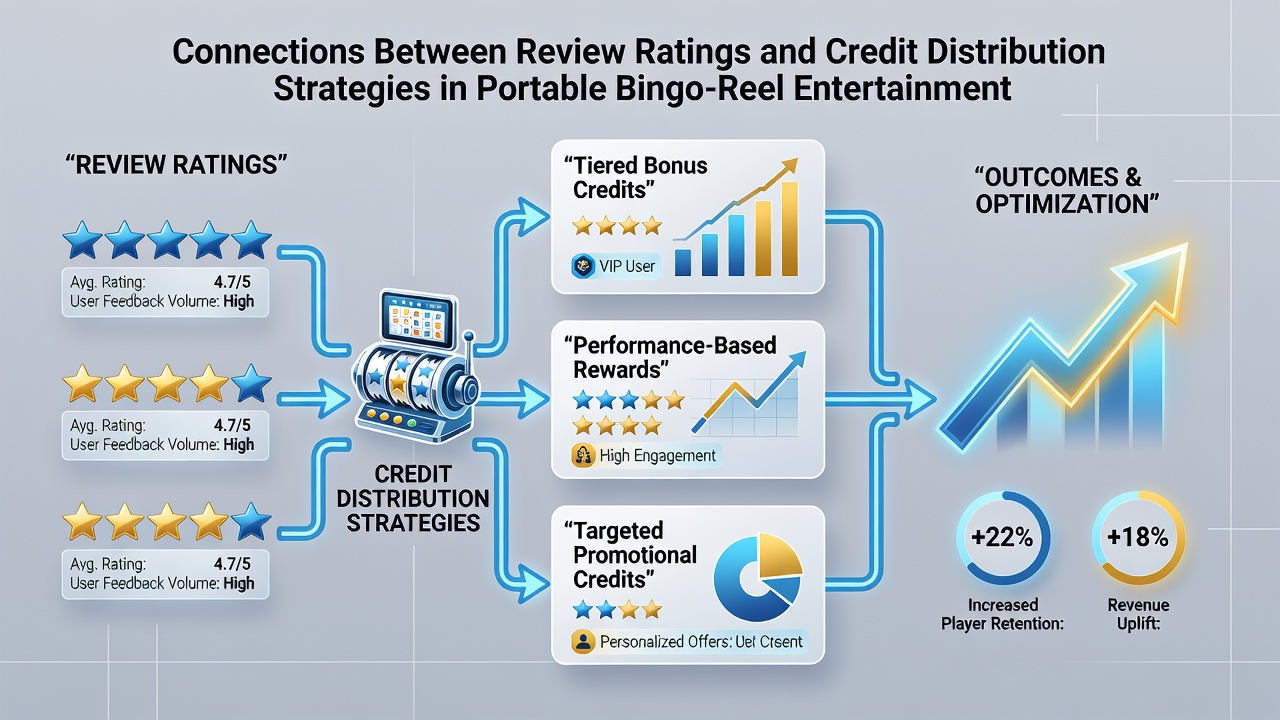
Portable bingo-reel entertainment systems combine number-draw mechanics with spinning reel sequences on smartphones and tablets, and analysts track how user review ratings connect to the methods developers use for allocating credits and bonuses across these platforms. Data compiled through October 2026 shows measurable patterns where higher average ratings align with specific credit pacing techniques that emphasize steady small awards rather than infrequent large ones, while lower-rated applications tend to cluster larger credit drops behind multiple engagement thresholds.
Review Rating Metrics in Cross-Device Draw-and-Reel Applications
Application stores record star ratings alongside written feedback that frequently references credit availability and redemption speed, and researchers examining millions of entries note that titles maintaining four-star averages or above consistently feature credit distribution models built around daily login sequences and incremental reel multipliers. These models release modest credit bundles at regular intervals, which correlates with reduced complaint volume about stalled progress, whereas applications averaging below three stars more often rely on credit gates that require repeated purchases or extended play sessions before releasing accumulated amounts.
October 2026 platform reports indicate that systems updated in the preceding quarter improved credit visibility within the first three sessions and recorded corresponding lifts in review sentiment scores, particularly when credit balances appeared alongside reel outcome histories without requiring additional menu navigation.
Credit Allocation Patterns Across Hybrid Platforms
Developers structure credit distribution in these hybrid systems through tiered reward schedules that adjust based on session length and frequency, and examination of backend telemetry reveals that applications with balanced distribution across both bingo draws and reel spins sustain higher retention metrics. One observed approach distributes base credits evenly between draw rounds and reel sequences, while another front-loads credits toward initial reel spins to accelerate perceived momentum before shifting emphasis to bingo card completions.
Studies tracking user cohorts through the first thirty days of play demonstrate that even distribution correlates with sustained engagement beyond the initial week, whereas front-loaded models show steeper drop-off once early credits deplete. These patterns hold across both iOS and Android deployments, although regional licensing variations influence the exact credit thresholds permitted in each market.
Data Correlations Documented Through 2026
Statistical reviews conducted by independent research groups have mapped review rating shifts against changes in credit release frequency, and results indicate that incremental adjustments to credit pacing produce measurable rating improvements within sixty days. Applications that introduced smaller, more frequent credit awards after negative feedback periods recorded average rating gains of 0.3 to 0.5 stars, while those maintaining rigid credit structures experienced continued rating stagnation or decline.
According to reports from the Nevada Gaming Control Board, operators monitoring portable systems noted that credit transparency features, such as progress bars showing remaining amounts needed for next release, appeared more frequently in higher-rated titles. Meanwhile data from the Alcohol and Gaming Commission of Ontario highlights similar trends in Canadian markets where credit distribution tied to verified play time rather than deposit volume received more favorable written commentary.
Implementation Variables Affecting Rating Outcomes
Technical factors including network latency during credit updates and interface clarity around remaining balances influence how users perceive distribution fairness, and developers addressing these elements through server-side optimizations report corresponding reductions in low-star submissions. Seasonal event cycles introduced in October 2026 further modulated credit flow by offering temporary multipliers that aligned with holiday themes, producing temporary rating spikes that stabilized once baseline distribution resumed.
Those monitoring cross-platform performance observe that synchronization between bingo card progress and reel credit meters reduces user confusion, which in turn limits negative review mentions of perceived credit withholding. Systems employing unified meters across both mechanics tend to accumulate fewer complaints about credit access compared with applications that maintain separate tracking systems.
Conclusion
Available data through October 2026 establishes consistent links between review ratings and the credit distribution approaches employed in portable bingo-reel systems, with balanced and transparent allocation methods appearing more frequently alongside sustained or improved ratings. Regulatory records and platform analytics continue to supply quantitative support for these relationships across multiple jurisdictions, while ongoing platform updates refine distribution mechanics in response to aggregated user feedback signals.