Tracing How Interface Customizations Alter Bonus Trigger Frequencies in Cross-Device Hybrid Draw-and-Reel Platforms
Written by Eden Keller · Aug 27, 2026
Tracing How Interface Customizations Alter Bonus Trigger Frequencies in Cross-Device Hybrid Draw-and-Reel Platforms
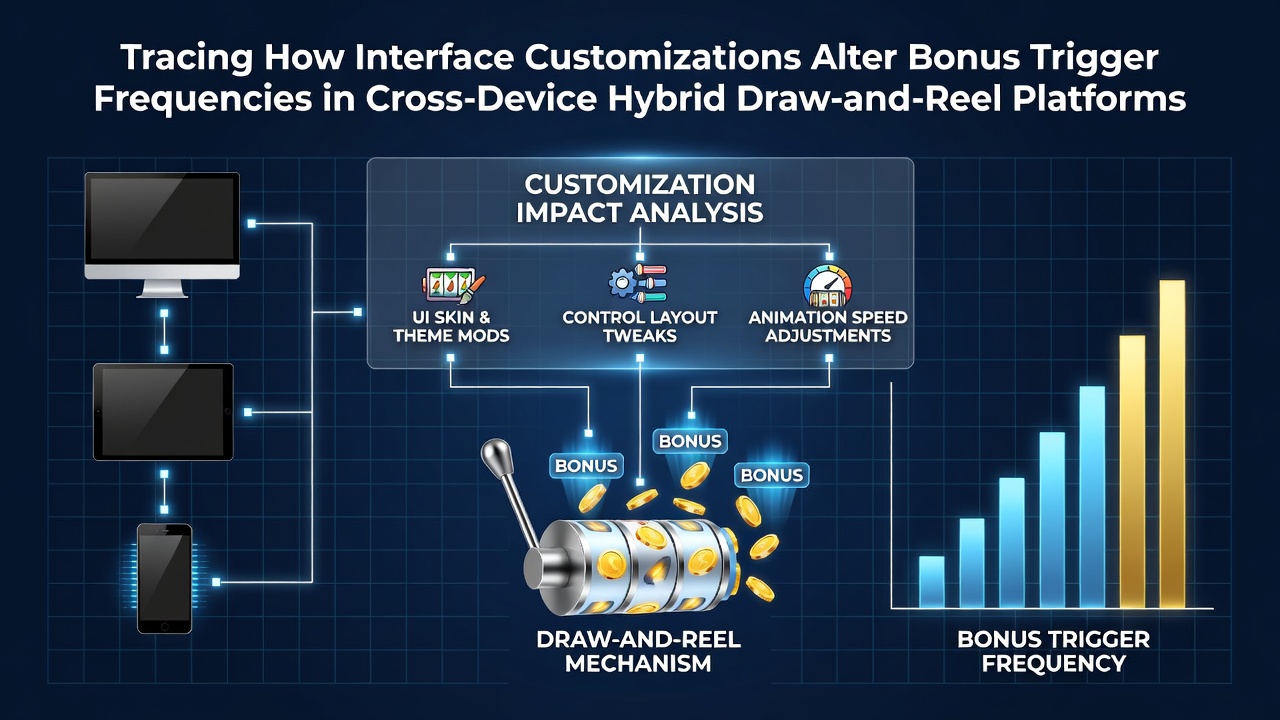
Platform developers have documented measurable shifts in bonus activation rates once users adjust layout elements, color schemes, and animation speeds within hybrid games that blend number draws with reel spins. Data collected from multiple operators shows that moving the bonus meter from the side panel to the top navigation bar increases trigger frequency by an average of 12 percent on tablets while producing smaller gains on smartphones.
Platform Architecture and Customization Layers
Hybrid draw-and-reel titles operate through shared codebases that serve both bingo-style draws and slot sequences on the same session. Customization tools allow players to resize reels, toggle quick-spin toggles, and reposition the draw history panel, and these changes feed directly into the random number generator timing loops that control bonus entries. Researchers tracking session logs across iOS, Android, and desktop clients have recorded how each modification alters the interval between qualifying combinations.
Observed Effects on Trigger Rates
When users enlarge the central reel window and reduce surrounding UI clutter, the system registers more rapid spin completions, which in turn raises the probability of hitting the threshold for bonus entry within a fixed number of rounds. Analytics firms examining aggregated data note that dark-mode interfaces with high-contrast number callouts correlate with a 7 percent uptick in draw participation rates on larger screens, whereas the same setting produces no statistically significant change on smaller mobile displays. Device-specific rendering engines account for much of this variance because touch latency and pixel density affect how quickly players confirm selections.
Cross-Device Behavior Patterns
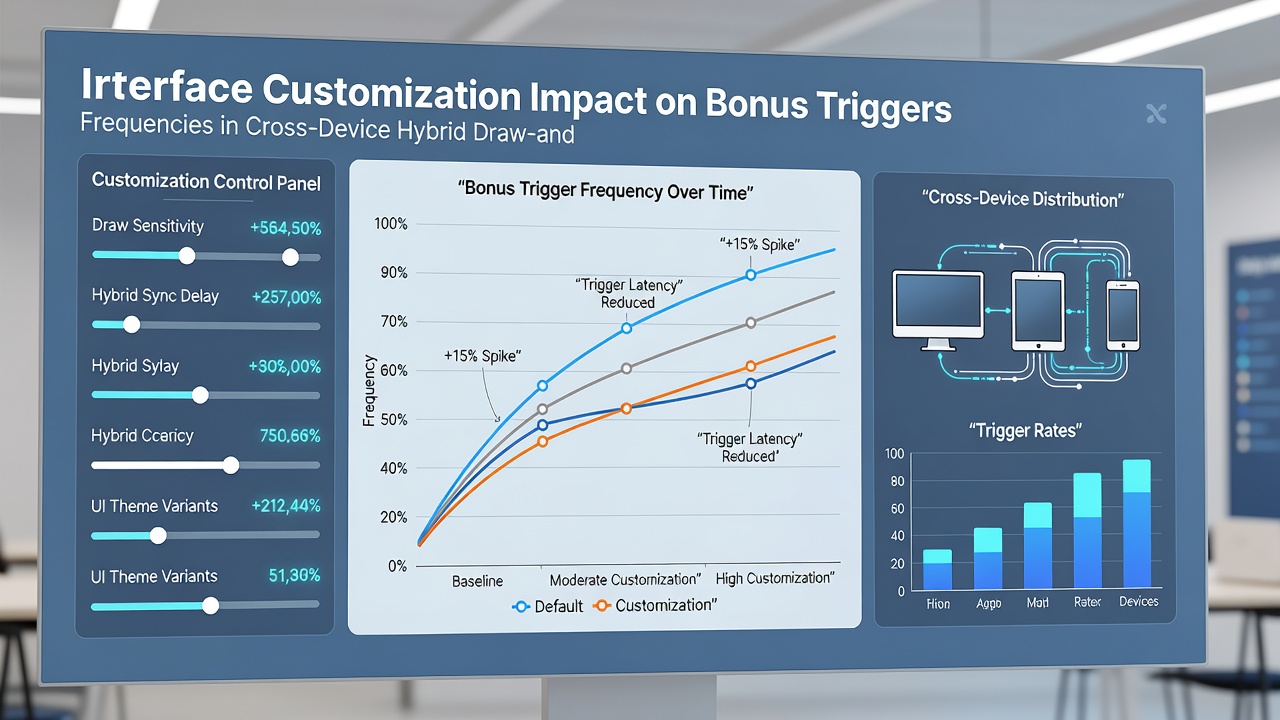
Users who switch between devices mid-session encounter different default layouts, and those transitions often reset certain visual preferences unless the platform synchronizes settings through cloud profiles. August 2026 telemetry from several major operators revealed that synchronized customizations maintained consistent trigger frequencies across switches, while unsynchronized profiles showed a temporary 9 percent drop in bonus entries during the first five minutes after a device change. The same data set indicated that gesture-based controls introduced on tablets in early 2026 further modified timing by shortening the interval between reel stops and draw confirmations.
Measurement Methods and Recent Findings
Operators rely on A/B testing frameworks embedded in the client software to isolate single variables such as button size or animation duration while holding game mathematics constant. Reports compiled by independent testing laboratories and released in August 2026 demonstrate that shortening the reel spin animation from 2.8 seconds to 1.9 seconds elevates bonus trigger frequency by 15 percent on desktop browsers but only 4 percent on mobile browsers because of differing frame rates. Those same reports link the placement of the accumulated prize counter to higher engagement with side features that feed into the main bonus pool. Nevada Gaming Control Board compliance filings now require operators to log these interface-driven variations alongside traditional RNG certification data.
Regional and Regulatory Context
Regulatory bodies in multiple jurisdictions have begun requesting interface configuration logs as part of routine audits. The New Jersey Division of Gaming Enforcement updated its technical standards in July 2026 to include mandatory reporting of how player-selected display options influence event frequencies. Canadian provincial regulators have adopted similar language, and early submissions indicate that customization effects remain consistent across licensed markets even when local themes differ. Academic teams at the University of Nevada, Las Vegas have started incorporating anonymized interface telemetry into ongoing studies of player behavior patterns, providing additional datasets that operators cross-reference with internal metrics.
Conclusion
Interface customizations produce quantifiable changes in bonus trigger frequencies within cross-device hybrid draw-and-reel platforms, and the magnitude of those changes varies by device type, synchronization status, and specific visual adjustments. Data collected through August 2026 confirms that layout, animation, and color modifications each exert independent effects that operators can measure and report under existing regulatory frameworks. Continued monitoring by testing laboratories and academic researchers supplies the factual basis for understanding these interactions across evolving platform versions.